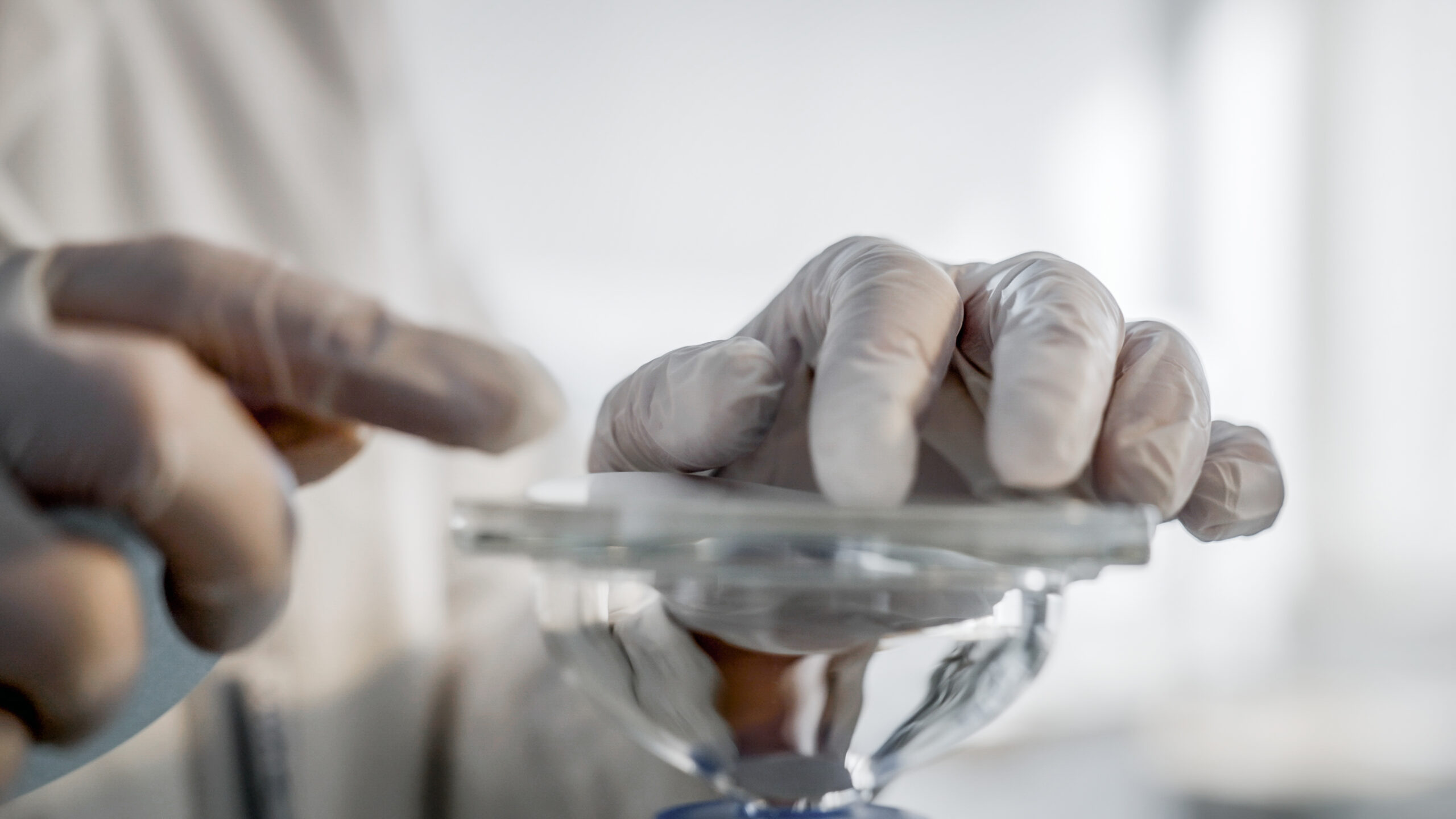
A man in a white coat transfers material from a sample bottle into an analysis device and clicks the machine on. In his hands is a by-product of industrial processes, which is intended to be transformed into new circular economy products for the chemical industry. He doesn’t reveal much about the product’s quality or its final application, as the research is still ongoing.
“The goal is to create new products for industrial use,” he says with a quick nod.
Petri Salmela, 31, from Oulu, holds a Master’s degree in chemistry and has worked in line operations and processes for large organizations. He has developed novel organic molecules that can be utilized, for instance, in solar cell materials. Salmela has been with Tapojärvi since 2020.
In August, he transitioned from the role of process chemist to the position of head of the Oulu laboratory. Tapojärvi provides industrial circular economy services across various sectors, including the development, manufacturing, and commercialization of products made from industrial by-products.
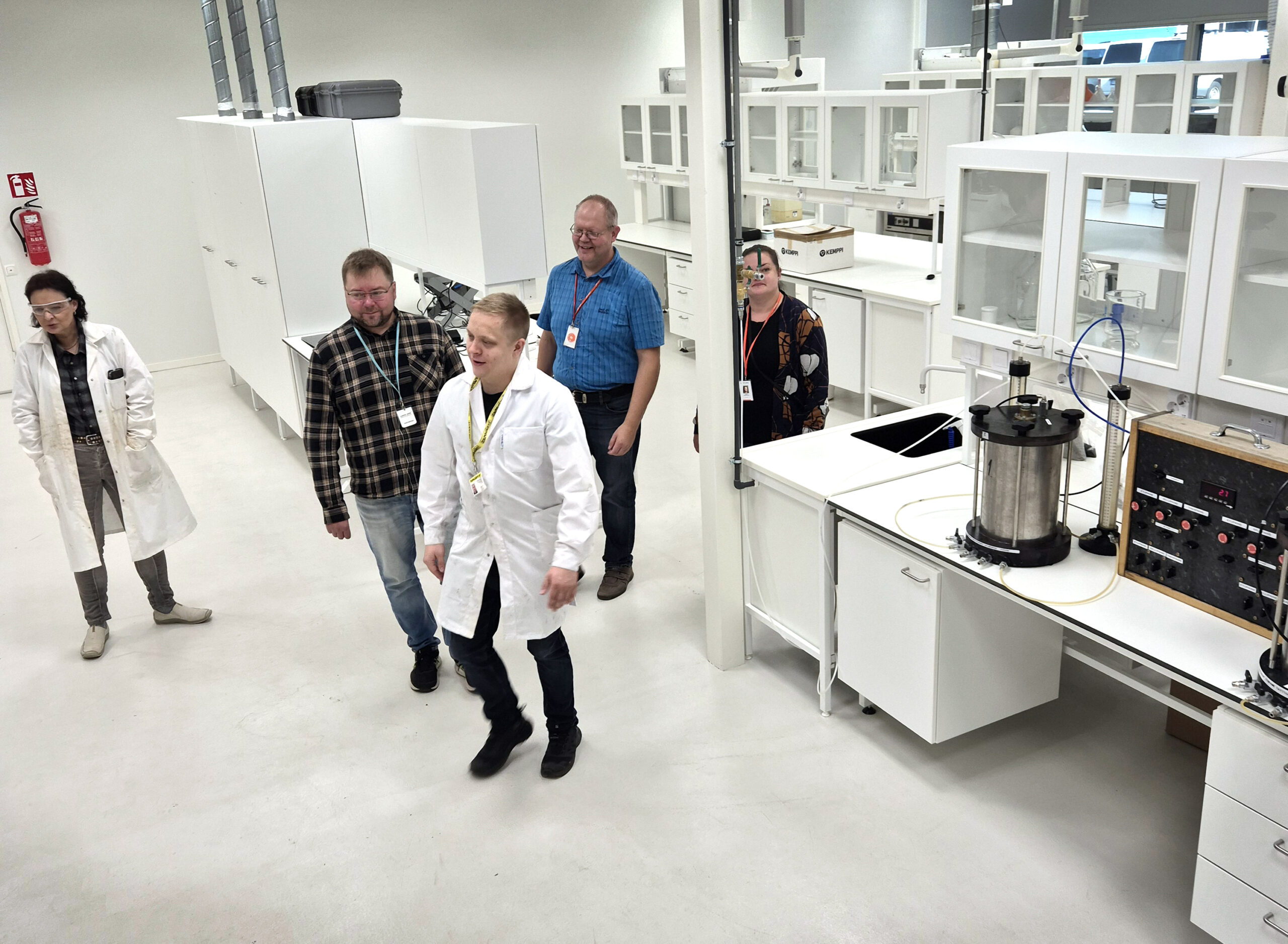
“The Oulu laboratory is at the heart of material research, offering a wide range of analysis and research capabilities. The lab enables sample pre-treatment, such as crushing, grinding, and screening, as well as elemental analysis, environmental suitability assessments, and binder studies,” Salmela explains.
Tapojärvi’s research and development unit is currently engaged in several circular economy projects, mainly divided into four categories: services for the mining, steel, and pyrometallurgical industries, the reuse of soda ash from the pulp and paper industry, and the recovery of WEEE (Waste Electrical and Electronic Equipment) from the electronics industry.
“When a development project turns into a product or service, we have achieved our goals,” he emphasizes.
Improving Roads with Circular Economy Products
Researching and testing by-products is a slow process, and quick wins are not to be expected. Safety, quality, and environmental issues must be considered, and permits obtained if necessary. Legislation is a key part of Salmela’s work.
However, the laboratory manager has a few success stories to share.
“Who among us hasn’t driven into a pothole or navigated a bumpy road? Even though roads are repaired, the problem quickly returns because there often isn’t enough funding for a full road renewal. Instead, temporary fixes are applied. We’ve developed road maintenance products that have been successfully tested and used in both Finland and Italy.”
Tapojärvi set out to tackle road maintenance issues by designing products that reduce environmental impact and improve cost efficiency.
“From industrial by-products, we’ve developed, for instance, a geopolymer-based asphalt patching compound, which is used to repair potholes and improve road conditions. The product hardens quickly, and its cost-efficiency is based on durability when compared to, for example, cold asphalt.”
The company has also developed a product for the maintenance of gravel and surface-frost-damaged roads. Tapofix has been tested in Sodankylä by Destia, and the results have been excellent. Tapofix is made from by-products of the forest industry.
“Here in Oulu, we produce Tapofix and also conduct research on geopolymers and low-carbon binders, as well as on chemical products and their manufacturing,” Salmela says.
Recovering Valuable Minerals
While showcasing the laboratory, Salmela highlights the importance of material recovery. He points out electrical and electronic waste, such as circuit boards, from which the recovery of minerals is currently suboptimal.
With new technologies, it is now possible to utilize materials that previously couldn’t be recovered and ended up as waste.
The laboratory manager talks about a collaboration between Tapojärvi, Alva, and Elker, which aims to recover REE (Rare Earth Elements) and critical materials from WEEE through a chemical process.
“By doing this, we can ensure the availability of critical raw materials and support Europe in achieving its climate and digital goals, while also complying with the EU’s CRM regulation.”
“It is important to recover critical materials without the need for mining.”